Medical Monitor: A Comprehensive Guide for Equipment Purchasers

In the ever-evolving field of healthcare, precision and reliability are crucial. One essential tool that ensures both is the medical monitor. For hospitals and medical equipment purchasers, understanding the significance, functions, and types of medical monitors is vital for making informed procurement decisions. This guide will provide you with everything you need to know about medical monitors.

What is a Medical Monitor?

A medical monitor is a specialized display device designed for use in healthcare settings. Unlike standard consumer-grade monitors, medical monitors meet rigorous standards for accuracy, reliability, and compliance with medical imaging protocols. These devices are engineered to display patient data, diagnostic images, and real-time vital signs with unmatched precision.

Medical monitors are widely used in various medical environments, including:

Diagnostic imaging rooms for displaying X-rays, CT scans, and MRIs.

Operating rooms for surgical guidance.

ICUs and patient wards for continuous monitoring of vital signs.

With features like high-resolution displays, DICOM (Digital Imaging and Communications in Medicine) compliance, and robust designs, medical monitors are indispensable tools for healthcare professionals.

What Are the Functions of Medical Monitors?

Medical monitors serve several critical functions in healthcare, making them a key component of any medical setup. Here are their primary roles:

Displaying Diagnostic Images Medical monitors provide high-quality, accurate displays of medical images, such as X-rays, MRIs, and ultrasound scans. Their exceptional color fidelity and grayscale rendering enable healthcare professionals to detect even the smallest abnormalities, ensuring accurate diagnoses.

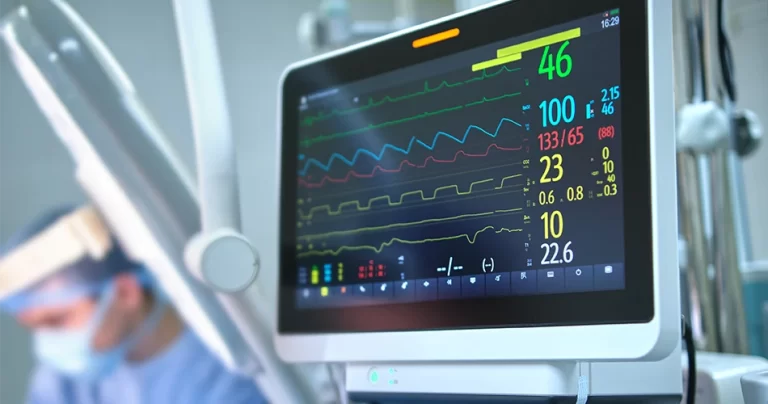
Real-Time Patient Monitoring In ICUs, emergency rooms, and operating rooms, medical monitors track and display vital signs like heart rate, blood pressure, oxygen saturation, and respiratory rate. These real-time updates allow clinicians to respond promptly to changes in a patient’s condition.

Enhancing Clinical Efficiency By integrating data from multiple medical devices, medical monitors provide a consolidated view of patient information. This feature improves workflow efficiency and helps medical teams make quick, informed decisions.

Supporting Telemedicine and Remote Consultations Many modern medical monitors include features for telemedicine, enabling remote consultations and second opinions by displaying high-resolution images and live patient data.

Types of Medical Monitors

Medical monitors come in various types, tailored to specific medical environments and applications. Below are the main categories:

1.Diagnostic Medical Monitors

Used in radiology and diagnostic imaging departments.

Offer high resolution (e.g., 4K or higher) and precise color calibration.

Compliant with DICOM standards to ensure image consistency across devices.

Ideal for reviewing CT scans, MRIs, and mammograms.

2.Surgical Medical Monitors

Designed for operating rooms, providing real-time imaging for surgeons.

Feature wide viewing angles, high brightness, and anti-reflective coatings.

Resistant to cleaning agents and built with durable, medical-grade materials.

3.Patient Monitoring Monitors

Found in ICUs, patient wards, and emergency rooms.

Display vital signs like ECG, blood pressure, and oxygen levels.

Often include alarm systems to alert healthcare providers of critical changes.

4.Pathology Monitors

Used for microscopic analysis and tissue examination.

Provide extremely high resolution and accurate color reproduction.

Essential for identifying subtle changes in pathology slides.

5.Portable Medical Monitors

Compact and lightweight, designed for mobility.

Ideal for emergency responders, ambulances, and home healthcare.

Provide essential monitoring capabilities on the go.

6.Multi-Purpose Monitors

Versatile devices that combine features of diagnostic, patient monitoring, and surgical monitors.

Suitable for smaller clinics or facilities with diverse needs.


Key Considerations for Procurement

When selecting medical monitors for your facility, consider the following factors:

Compliance and Standards: Ensure the monitor meets industry standards like DICOM, ISO 13485, and FDA certifications.

Resolution and Color Accuracy: Choose a resolution and color fidelity that match your application’s needs.

Durability and Maintenance: Opt for monitors designed for heavy use and easy cleaning in clinical environments.

Integration and Compatibility: Ensure compatibility with existing medical equipment and IT systems.

After-Sales Support: Look for suppliers offering robust warranties, technical support, and software updates.


Conclusion

Medical monitors are indispensable in modern healthcare, ensuring accurate diagnostics, effective treatments, and efficient workflows. By understanding their functions and types, medical equipment purchasers and hospital procurement teams can make informed decisions that enhance patient care and operational efficiency.

Whether you’re outfitting a new clinic or upgrading hospital facilities, selecting the right medical monitors is a critical investment in healthcare excellence.

If you are interested, you can read our article: medical grade touch screen monitor
Similar Posts

  • rugged touch screen monitor

    Rugged touch screen monitor is a special type of monitor designed for harsh environments and high-intensity use. Rugged touch screen monitor uses reinforced materials and advanced technology to ensure that it can work stably for a long time under harsh conditions. The touch screen of the tough touch screen monitor is an inductive liquid crystal display device that can receive input signals such as contacts. When the graphic button on the screen is touched, the tactile feedback system on the screen can drive various connection devices according to the pre-programmed program. The rugged touch screen monitor can be used to replace the mechanical button panel, and the touch screen display screen can create a vivid audio and video display effect. With the gradual maturity of…

  • Large touch screen monitor

    Large touch screen monitors are widely used in a variety of scenarios, such as education, business, restaurants, public information inquiry systems, conference rooms and control rooms. Touch screen monitors for business have greatly improved service efficiency and customer experience. Large touch screen monitors can be classified according to factors such as size, resolution and number of touch points. The basic principle is to install a touch screen on the monitor to give it a touch function. The ease of operation of large touch screen monitors ensures that employees can use it easily, and other possible operating requirements need to be considered. Therefore, for different usage environments, large touch screen monitors will have certain differences in configuration. Choice of touch screen monitor for restaurants Touch screen…

  • industrial lcd monitor industrial liquid display

    Industrial lcd monitor is a display device that uses liquid crystal materials to change their optical properties under the action of an electric field to display images. The display liquid crystal panel of industrial lcd monitor is the core part of the display. It consists of a multi-layer structure, including two glass substrates, liquid crystal materials, color filters, polarizers, etc. The backlight module of industrial lcd monitor provides a uniform light source so that the liquid crystal panel can display images. Common backlight types include CCFL and LED. The touch screen of industrial lcd monitor is an additional component that allows users to interact with the device through the touch screen monitor. The polarizer of industrial lcd monitor is used to control the polarization direction…

  • Open Frame Industrial Monitor

    Open Frame Industrial Monitor is a display device specially designed by WinTouch, which is mainly used in industrial automation and control systems. They are different from traditional commercial or home monitors. The design of Open Frame Industrial Monitor has no front panel frame, which allows the Open Frame Industrial Monitor to seamlessly integrate into the front of the machine or control panel, providing a smooth and neat appearance. Open Frame Industrial Monitor has industrial-grade durability and can withstand the harsh conditions in industrial environments, including high-frequency vibration and high temperature and humidity. The fanless design of Open Frame Industrial Monitor can avoid dust accumulation and noise problems caused by fans. The wide viewing angle technology of Open Frame Industrial Monitor can keep the image color…

  • Industrial touch panel display

    Industrial touch panel display integrates touch point control function. It is designed for wall installation and can provide users with intuitive interactive experience and information display. Industrial touch panel display has flexible installation methods such as VESA wall mounting, rack mounting, embedded mounting, etc. The installation methods of industrial touch panel display provide a certain degree of angle and height adjustment capabilities while saving space. In particular, the VESA wall mounting of industrial touch panel display can provide users with a unified interface standard, allowing consumers to easily mount their TV or industrial touch panel display on the wall or other brackets. Secondly, industrial touch panel display also has a stable power supply design to ensure that the device can operate reliably under various environmental…

  • medical grade touch screen monitor

    The medical grade touch screen monitor has high standards of image quality and durability. It is a professional display designed for medical environments. The medical grade touch screen monitor uses advanced touch technology to adapt to the special needs of medical environments. There are four main technologies for the working principle of touch screens: resistive touch screens, capacitive touch screens, surface acoustic wave touch screens, and optical touch screens. In the medical field, capacitive and surface acoustic wave touch technologies are most commonly used because they provide better accuracy and durability. The medical grade touch screen monitor can meet the monitoring needs of medical professionals in diagnosis, treatment, and patient care, and even equipment sensing needs, and can perform real-time monitoring. At the same time,…
Leave a Reply